



Lean Six Sigma Certification
A globally recognized pathway to build data-driven process improvement, problem-solving, and operational leadership skills.

A globally recognized pathway to build data-driven process improvement, problem-solving, and operational leadership skills.
TRUSTED BY OVER 100,000 PROFESSIONALS AND LEADING ORGANIZATIONS













Below are clear, straightforward answers to common questions about Six Sigma and Lean Six Sigma certification.
Six Sigma certification is a professional credential that validates a person’s ability to improve business processes by reducing defects, variation, and waste using data-driven methods.
Lean Six Sigma combines Lean’s focus on efficiency and waste reduction with Six Sigma’s focus on quality and consistency to improve organizational performance.
Lean Six Sigma certification is worth it for professionals in operations, quality, project management, healthcare, manufacturing, finance, and technology.
Each certification level is designed for a specific stage of your career, from foundational knowledge to advanced leadership in continuous improvement.

Advanced: For leaders who are initiating continuous improvement projects.
Not sure which belt is right for you?
Compare Yellow, Green, and Black Belt certifications → Lean Six Sigma Belts
SSGI Career Track Certifications
Transform your career trajectory with one of SSGI’s Professional Career Track Certification Bundles. From Lean Six Sigma to Agile, earn multiple accredited certifications, professional development credits for PMP & SHRM, and an overall professional designation that you can add to your resume and attach to LinkedIn.
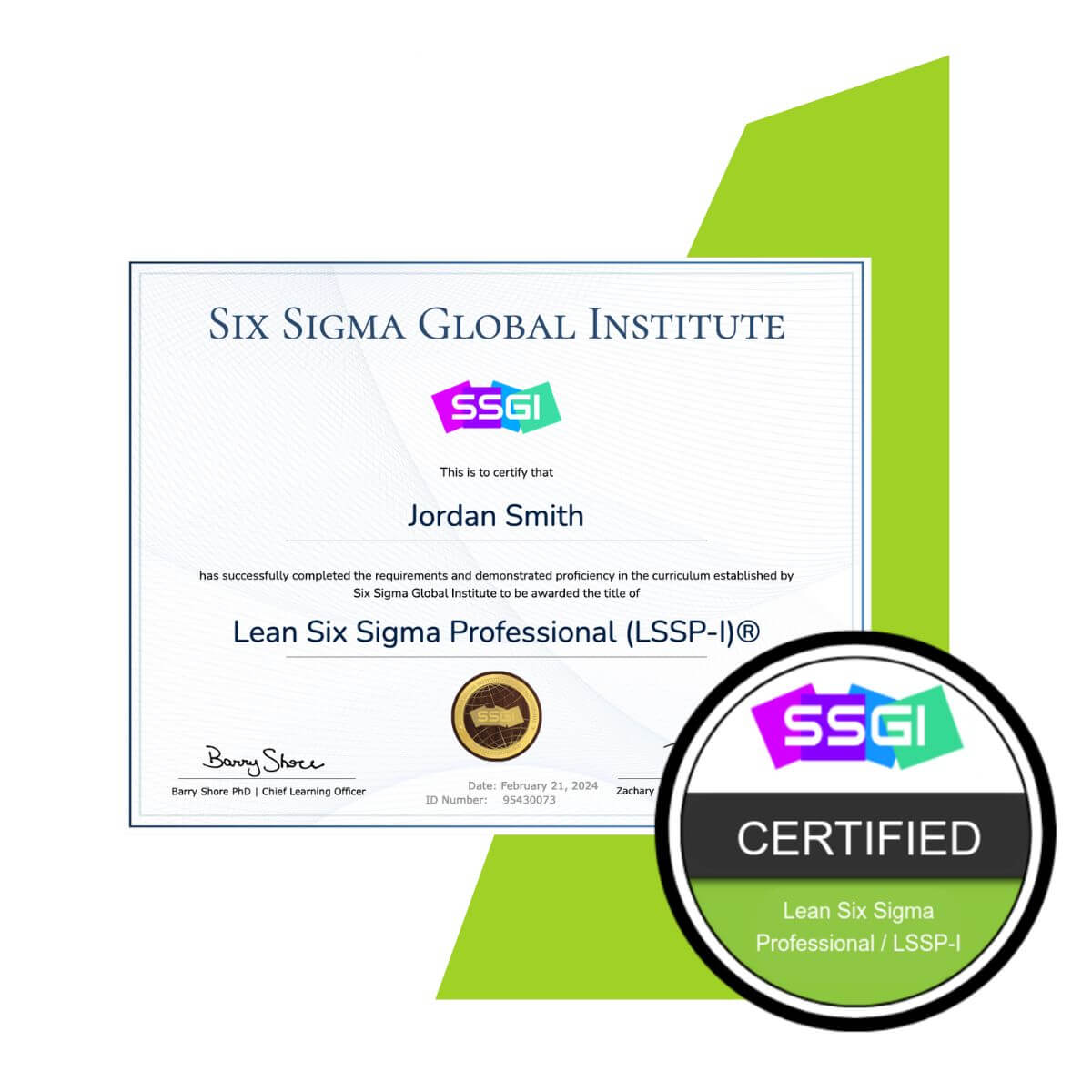 Lean Six Sigma Professional:
Yellow Belt, Green Belt, Process Improvement Specialist.
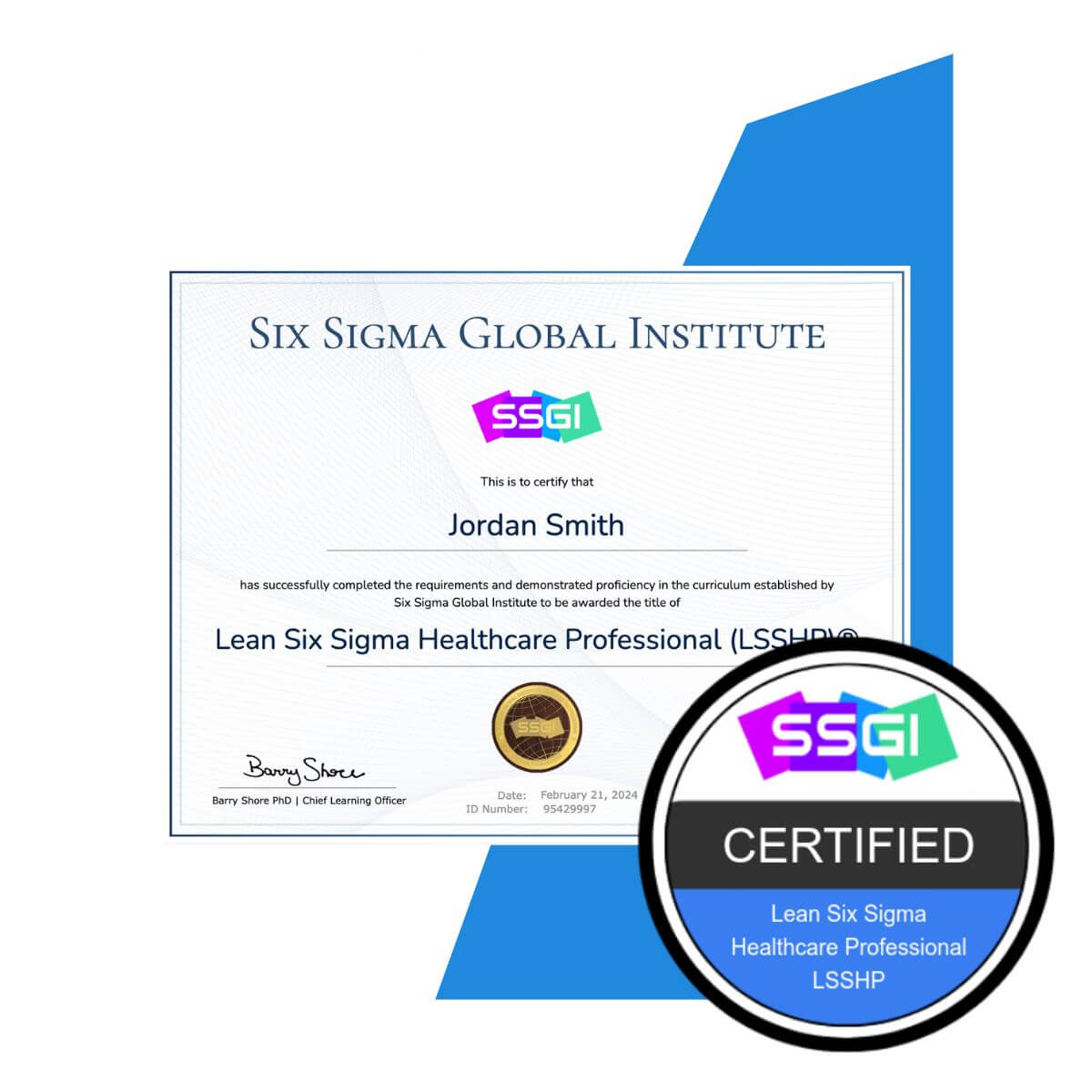 Lean Six Sigma Healthcare Pro:
Yellow Belt (HC), Green Belt (HC), Lean (HC) and Project Mgmt. (HC).
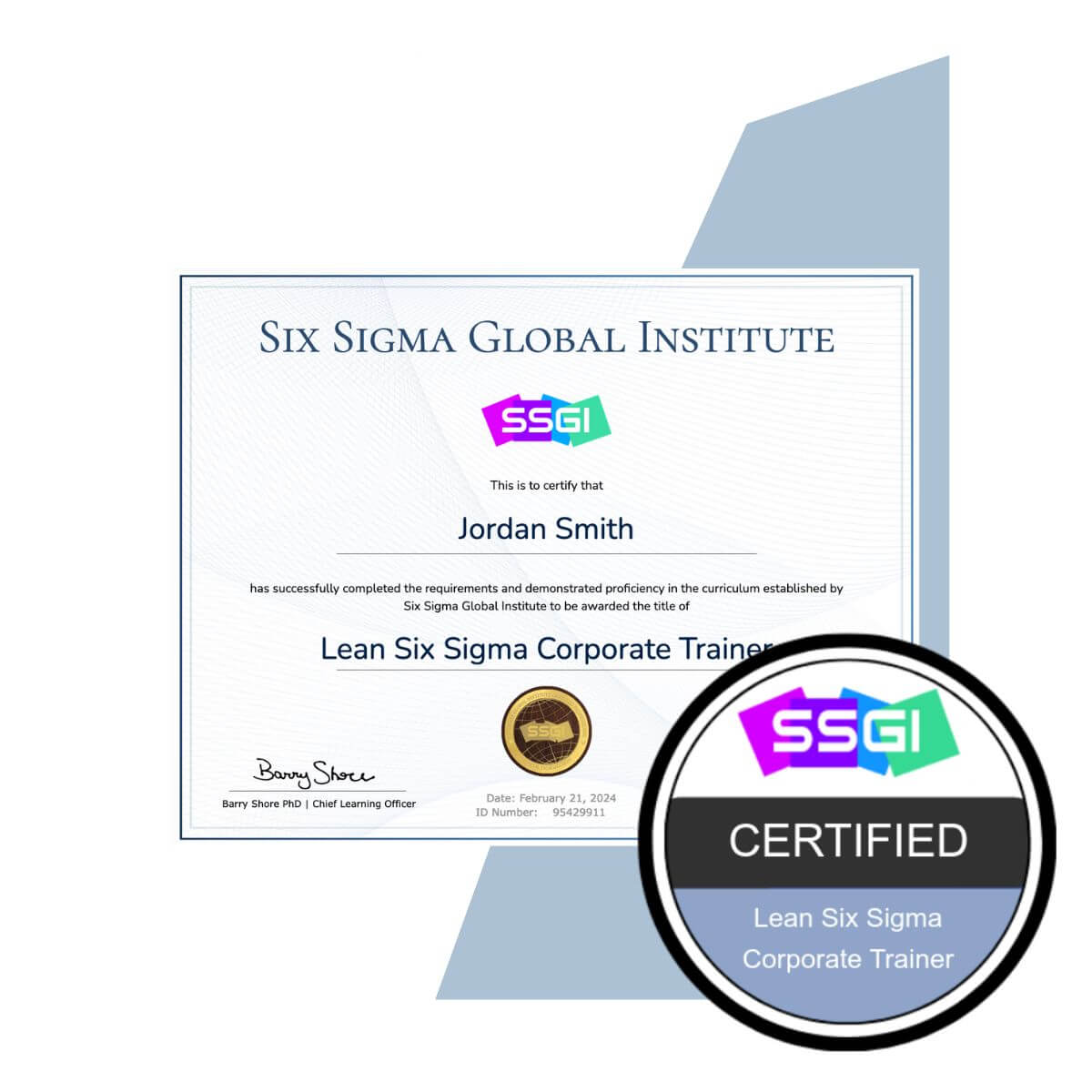 Lean Six Sigma Corporate Trainer:
Corporate Trainer, Lean Six Sigma Black Belt and Lean Practitioner.
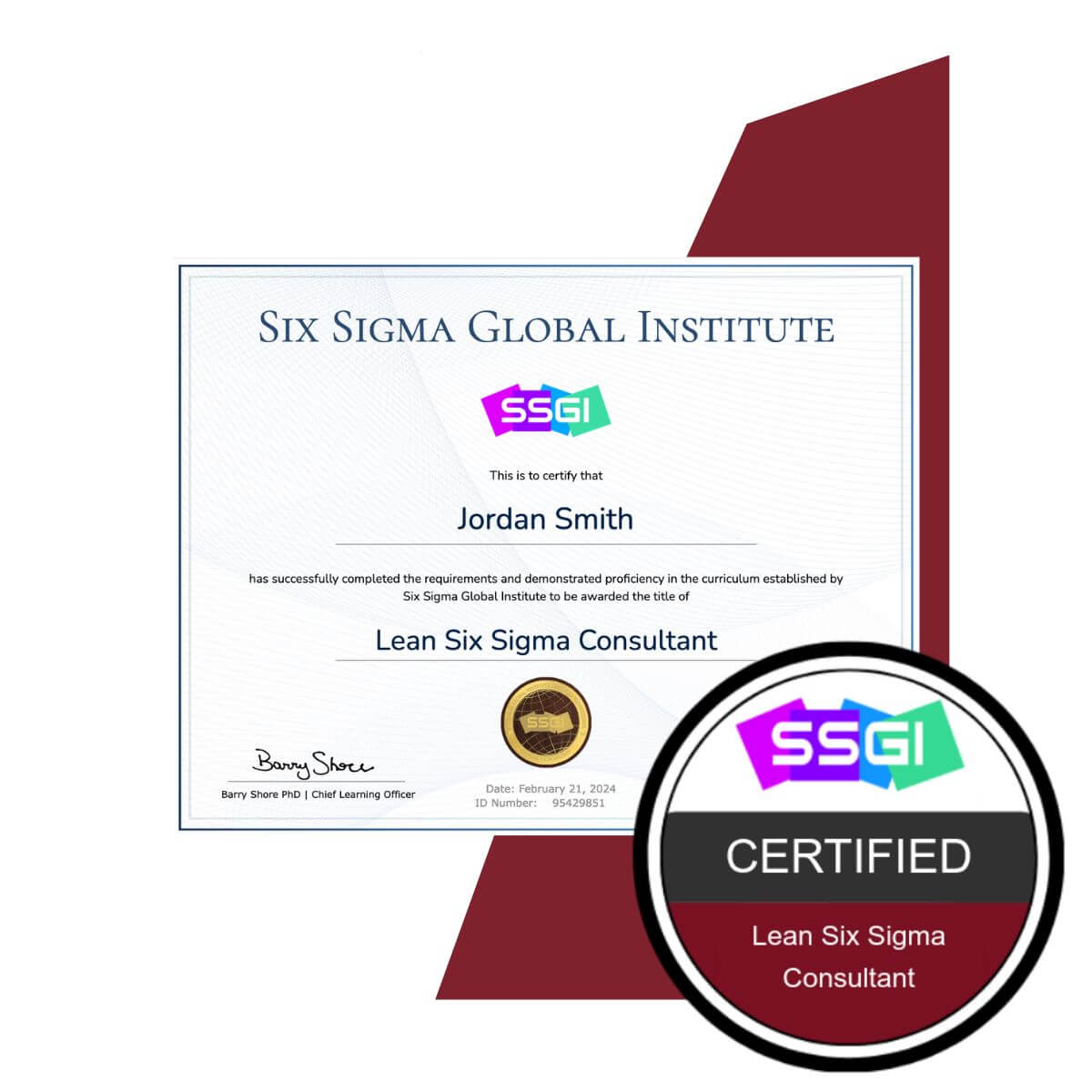 Lean Six Sigma Consultant:
Certified Business Consultant and Lean Six Sigma Black Belt.
SSGI’s Lean Six Sigma training is designed to build real capability, not just familiarity with tools. Programs are developed by Prof. Barry Shore, PhD — a McGraw-Hill Award–winning author and former professor with over 40 years of experience in operations management and process improvement.
Our approach emphasizes practical application, structured problem-solving, and decision-making skills that translate directly to everyday operations. Professionals complete training with the ability to apply Lean Six Sigma methods confidently in real business environments.
Real Results From Certified Professionals
Industry Trusted • Globally Recognized • Accredited for PMI® PDUs and SHRM® PDCs
SSGI is a globally recognized provider of Lean Six Sigma certification, trusted by organizations across industries and regions. Our programs align with recognized professional standards and offer preapproved PMI® PDUs and SHRM® PDCs, with additional credibility through our partnership with the Baldrige Foundation.

SSGI Alumni work for leading companies across numerous industries, sectors and job roles throughout the world.

Adam Damiano
Working at:

Stephanie Genest
Working at:


Muzzafer Khaja
Working at:


Jinendra Bothra
Working at:
Lean Six Sigma is applied by organizations to improve how work actually gets done. It focuses on designing processes that are both efficient and consistent, so improvements are repeatable and measurable over time.
Lean focuses on efficiency and eliminating waste, while Six Sigma focuses on quality and consistency. When combined, these approaches help organizations improve flow without sacrificing precision.
Organizations adopt Lean Six Sigma because it develops professionals who can identify root causes, lead structured improvement, and deliver measurable performance gains. These skills support better decision-making, more reliable processes, and sustained operational performance across teams.
Lean Six Sigma certification delivers practical benefits for both professionals and organizations by strengthening problem-solving, decision-making, and execution.
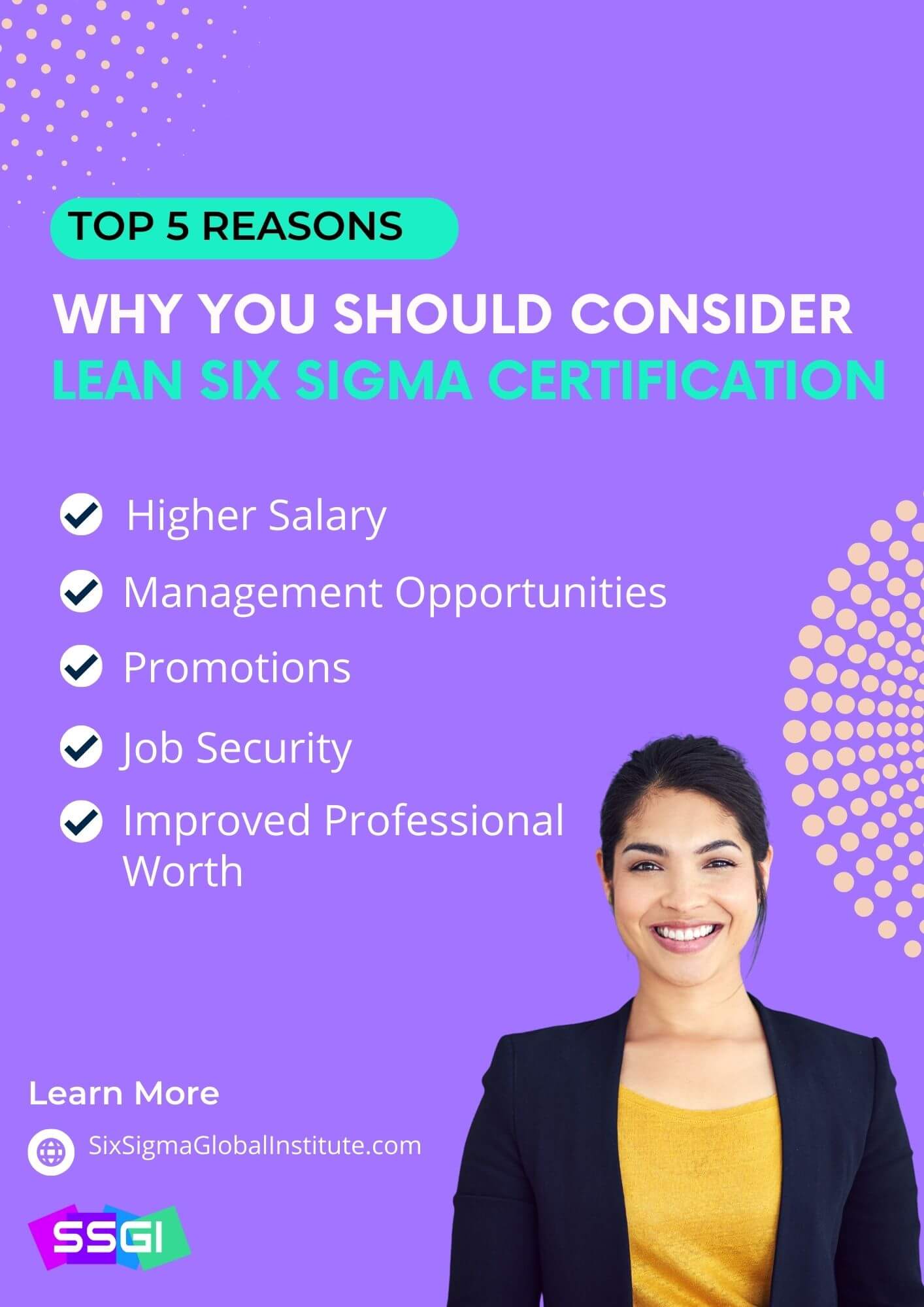
Earning a Lean Six Sigma certification can lead to increased salary potential as the expertise and methodologies gained through Lean Six Sigma training are highly valued by organizations. Certified Lean Six Sigma professionals frequently receive recognition in the form of competitive salaries and possible bonuses from employers.
Lean Six Sigma certification can help to excel your professional advancement by showcasing a dedication to excellence in process optimization and quality control. Two skills that are highly valued by organizations. Certified Lean Six Sigma professionals frequently distinguish themselves as leaders in enhancing efficiency, resulting in expanded responsibilities and career progression.
Lean Six Sigma certification not only denotes proficiency in process improvement and quality management but also creates pathways to leadership roles. Employers highly appreciate the problem-solving acumen and efficiency-oriented mindset cultivated through Lean Six Sigma training, frequently entrusting certified individuals with leadership responsibilities.
Becoming Lean Six Sigma certified assumes a pivotal role in enhancing efficiency and minimizing errors within an organization. Those with a lean six sigma certification posses the knowledge and tools necessary to methodically analyze processes, identify inefficiencies, and implement targeted improvements.
Lean Six Sigma certification significantly contributes to employment stability by positioning individuals as valuable assets equipped with specialized skills in process improvement and quality management. In a constantly evolving job market, certified professionals distinguish themselves for their systematic approach to enhancing operational efficiency and reducing defects.
Holding a Lean Six Sigma certification not only enhances employability but also establishes a solid foundation for long-term career stability in roles where systematic problem-solving and continuous improvement are highly prized.

Who should consider getting Lean Six Sigma certified? Well, Lean Six Sigma concepts and tools can be applied to just about any process or job function that requires problems to be solved. From Customer Service to Operations, Lean Six Sigma plays a vital role in delivering quality services/products.
Here are a few examples of job roles that benefit from Six Sigma: HR & IT, Sales & Marketing, Customer Service, Accounting, Manufacturing, Operations and Quality Assurance.

Lean Six Sigma concepts and tools can be applied to almost any industry around the world. From Healthcare to Manufacturing, Lean Six Sigma methodologies are valued by Fortune 500 companies across every industry.
The following industries employ professionals who have Lean Six Sigma Certification: Logistics, Manufacturing, Healthcare, Government, Finance, Education, Social Services and many more.
Equip Your Teams for Peak Performance
Organizations use Lean Six Sigma team training to build consistent problem-solving capability at scale. SSGI’s team programs equip employees with practical tools to reduce waste, improve quality, and deliver measurable performance improvements across functions. This approach helps organizations develop internal capability, not just complete training.



Is Lean Six Sigma right for me? Does Lean Six Sigma certification increase salary? Get your Lean Six Sigma related questions answered below, or contact us for additional assistance.
Yes. Lean Six Sigma certification is widely recognized by employers across industries such as manufacturing, healthcare, logistics, finance, and technology. Organizations value Lean Six Sigma certified professionals for their ability to improve efficiency, reduce costs, and deliver measurable business results.
Lean Six Sigma Certification is broken down into belts. These include: Yellow Belt, Green Belt, Black Belt and Master Black Belt. Each belt is associated to a different skill level.
Yes, earning a Six Sigma certification will help you to increase your salary potential. Additional factors such as previous experience, location and educational background come into place as well.
No prior experience is required to begin Lean Six Sigma certification. Entry-level certifications like Yellow Belt are designed for beginners, while Green and Black Belt programs build progressively on experience and responsibility. Most professionals start at the level that best matches their current role and goals.
First, you must understand what is the difference between Lean and Six Sigma? The primary purpose of Lean is to reduce waste. The goal of Six Sigma is to reduce variation for optimal quality control. Together they are a set of problem solving tools to enhance efficiency and deliver quality goods and services.
What is DMAIC? DMAIC is the core problem-solving framework used in Lean Six Sigma to improve existing processes. It stands for Define, Measure, Analyze, Improve, and Control.This structured approach helps teams reduce defects, eliminate waste, and drive consistent, long-term results.
The time it takes to get Six Sigma certified depends on several facts such as your learning style, availability, prior experience and knowledge level. As a general standard, you can expect to spend 2 weeks to complete Yellow Belt and 4 weeks for Green Belt certification.
Yes, you can get Six Sigma certified fully online via self-paced training programs which also include examination. There is no industry standard that requires you to go in-person or be sponsored by an organization in order to attain Six Sigma certification.
Want to know if a specific certification level is right for you? Below are quick answers to common questions about Yellow, Green, and Black Belts — plus links to explore further.



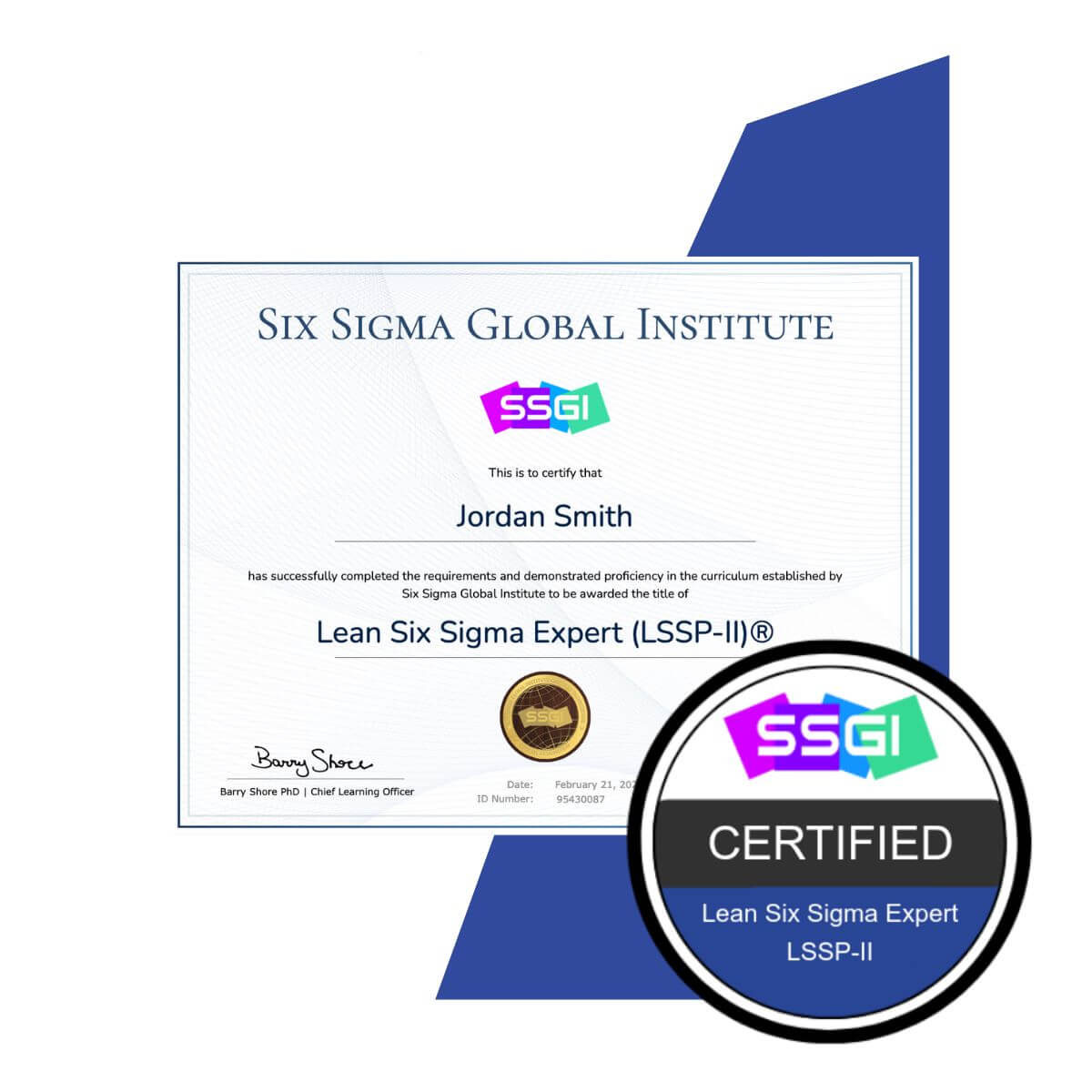 Lean Six Sigma Expert:
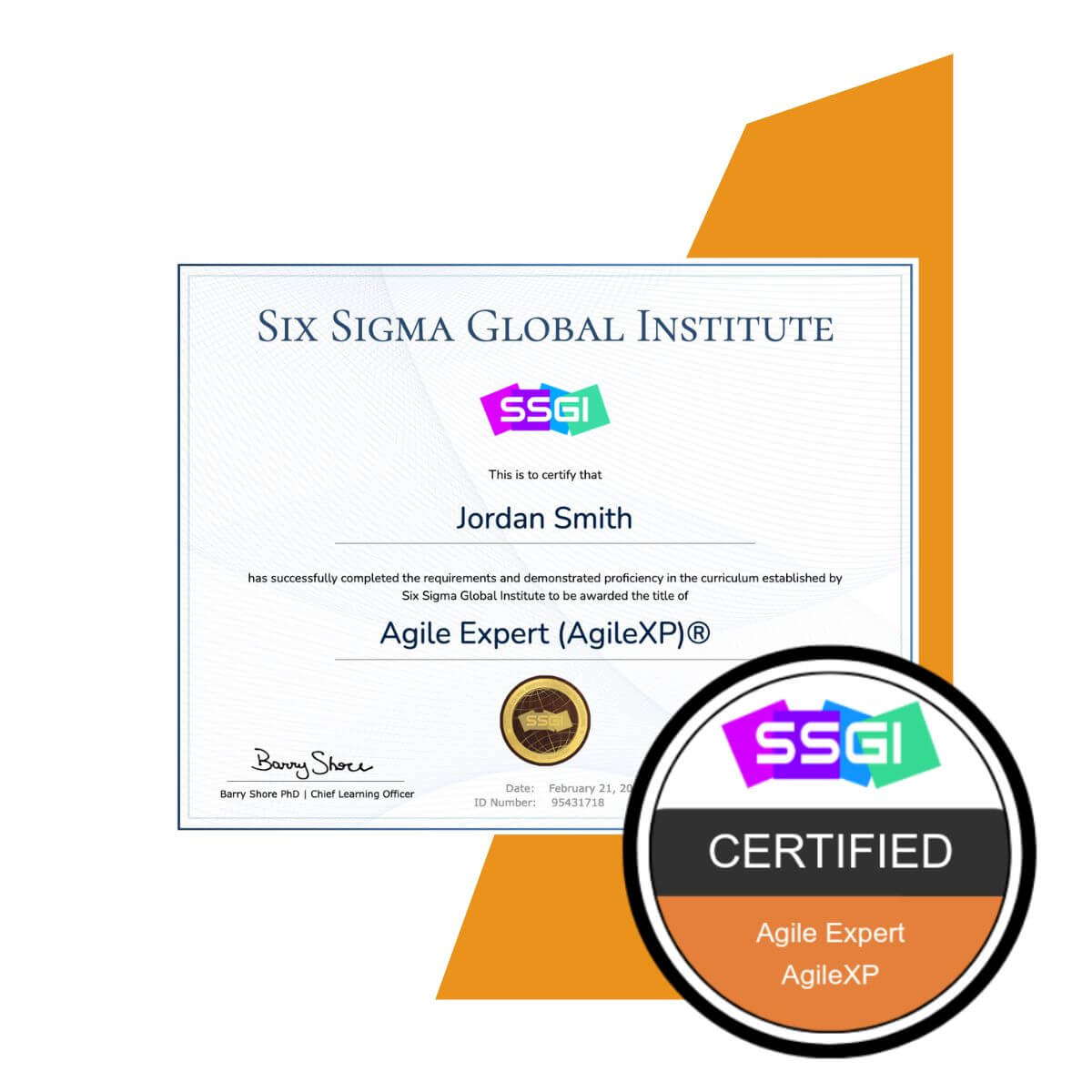 Agile Expert:
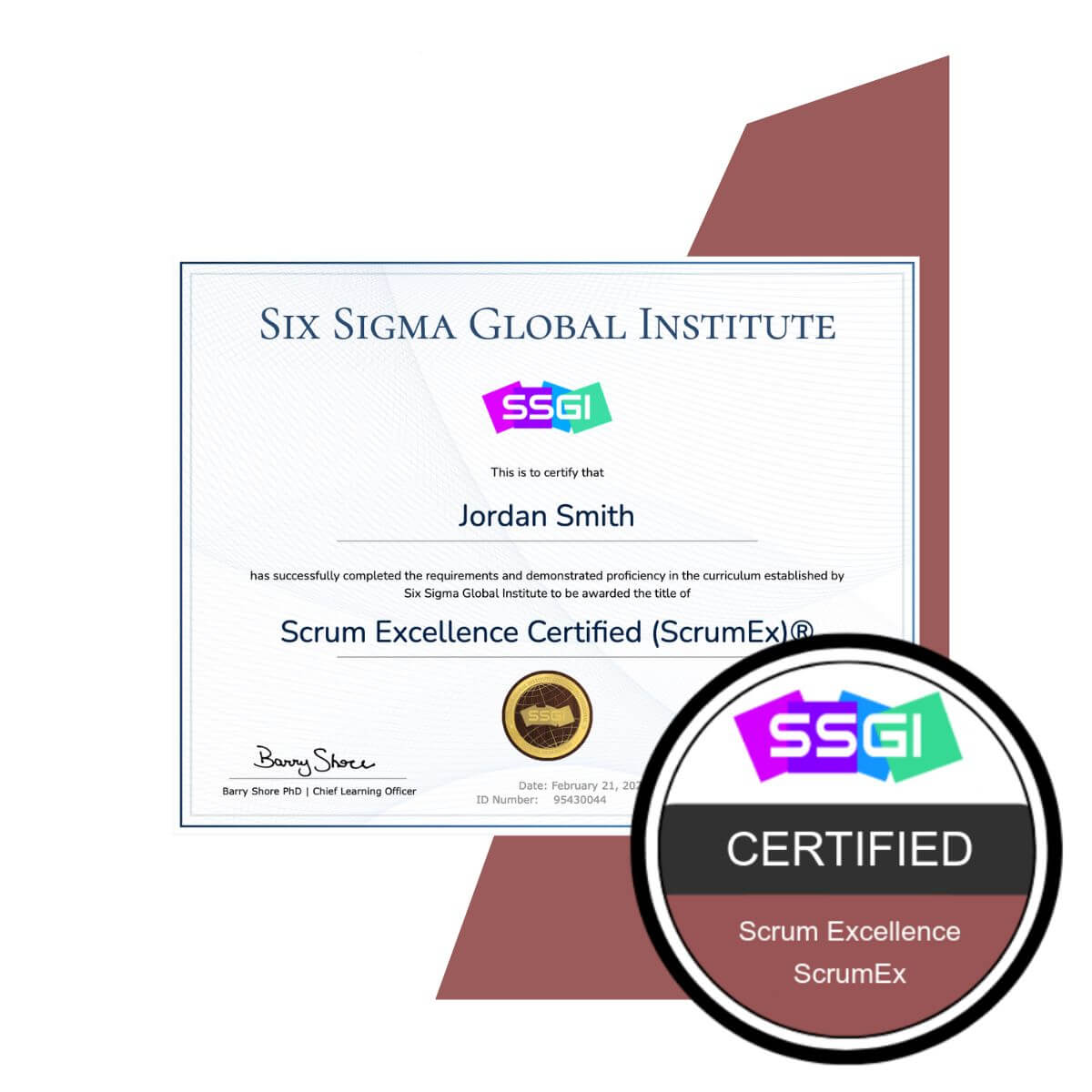 Scrum Excellence: